Here’s a topic that often comes up: “what does it mean to be initiated?”
First, let’s consider that the term “initiation” is widely used to describe various ceremonial practices, yet its traditional context, purpose, and relationship to titles such as priest or elder are often misunderstood.
As was stated by a Mamisi (female priestess in West African Vodún), the term “initiation” is an anthropological concept introduced by Western social scientists rather than an indigenous term. While commonly adopted today, it traditionally describes key rites of passage.
At its core, an initiation is a ceremonial alignment of an individual with their destiny or soul. Initiations serve as foundational milestones aimed at rooting an individual’s Siura (higher self) so they can fully manifest their purpose and navigate life in balance, with clarity regarding their identity and personal taboos.
Undertaking an initiation or rite of passage does not mean a person is required to become an active ritual practitioner, priest, or elder.
For the vast majority of people, initiation exists solely to bring spiritual alignment into everyday life. In traditional African societies, most initiated individuals continue in standard daily roles, such as farmers, market workers, educators, or parents, without serving as ritual specialists.
INITIATION ACROSS A LIFESPAN
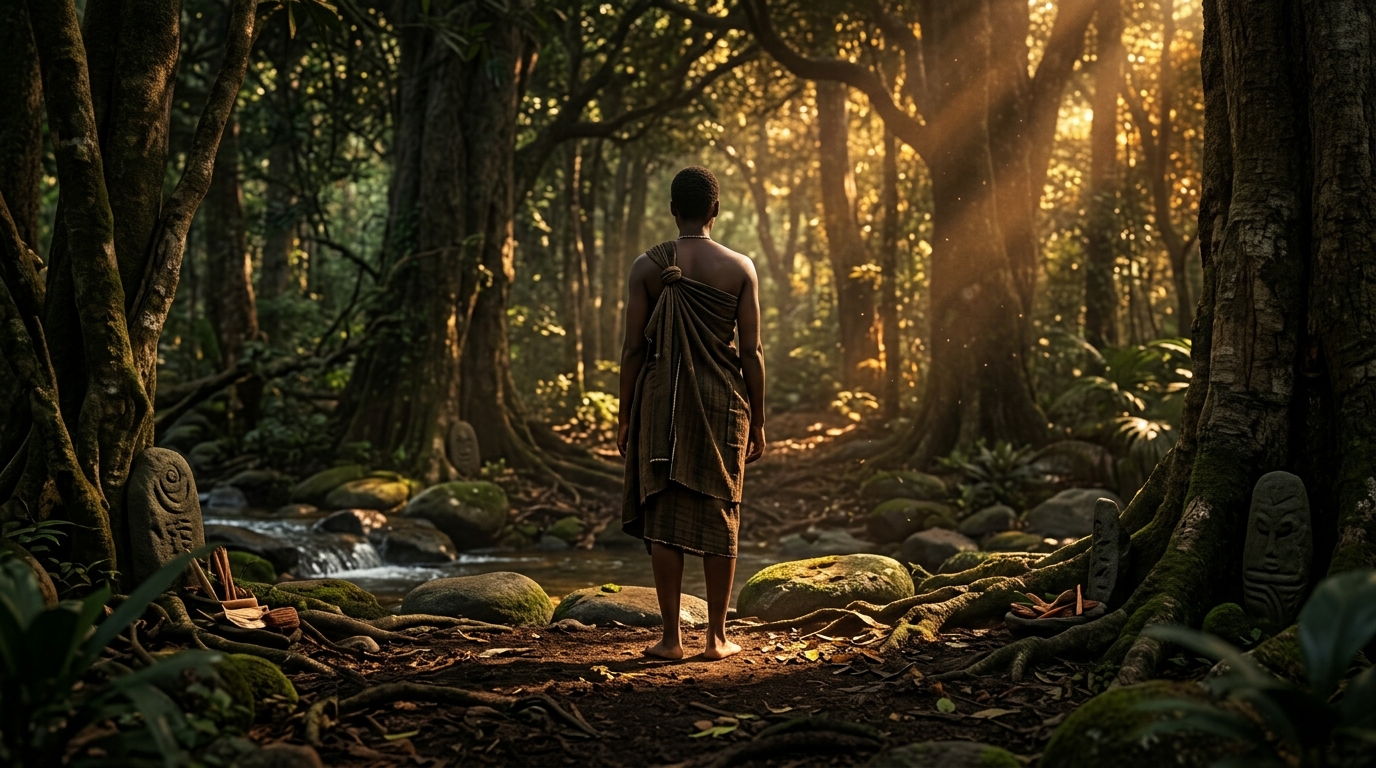
We also must consider that alignment with your destiny is not a single, isolated event; it unfolds through sequential stages over the course of a person’s life.
An individual may undergo multiple initiations as they evolve. For example, as detailed in his autobiography Of Water and the Spirit, Malidoma Somé experienced an initiation into manhood (a rite of passage) and later underwent further initiations to fulfill his calling.
While traditional initiations rely on elders, priests and an unbroken lineage, “self-initiation” has emerged as a crucial reality, especially in Western and modern contexts where living traditions are often distant or inaccessible.
For those disconnected from indigenous or ancestral lineages, self-initiation is the process of stepping onto the path through deep interior work, trainings such as Daughters of Tenbalu: REMEMBRANCE, solitary practice, existential crisis, or direct communion with the divine and unseen realms.
Life stages, thresholds, or the call to serve the community does not cease just because no formal rites exist!
What is rarely understood, in self-initiation, is that ancestors and helping spirits are the agents guiding the individual, while their earnest intent and life circumstances serve as the initiating force. For the individual, this informal (and often unacknowledged) initiation, is just as significant as a traditional rite.
CULTURAL VS. INITIATORY MEANING OF “ELDER”
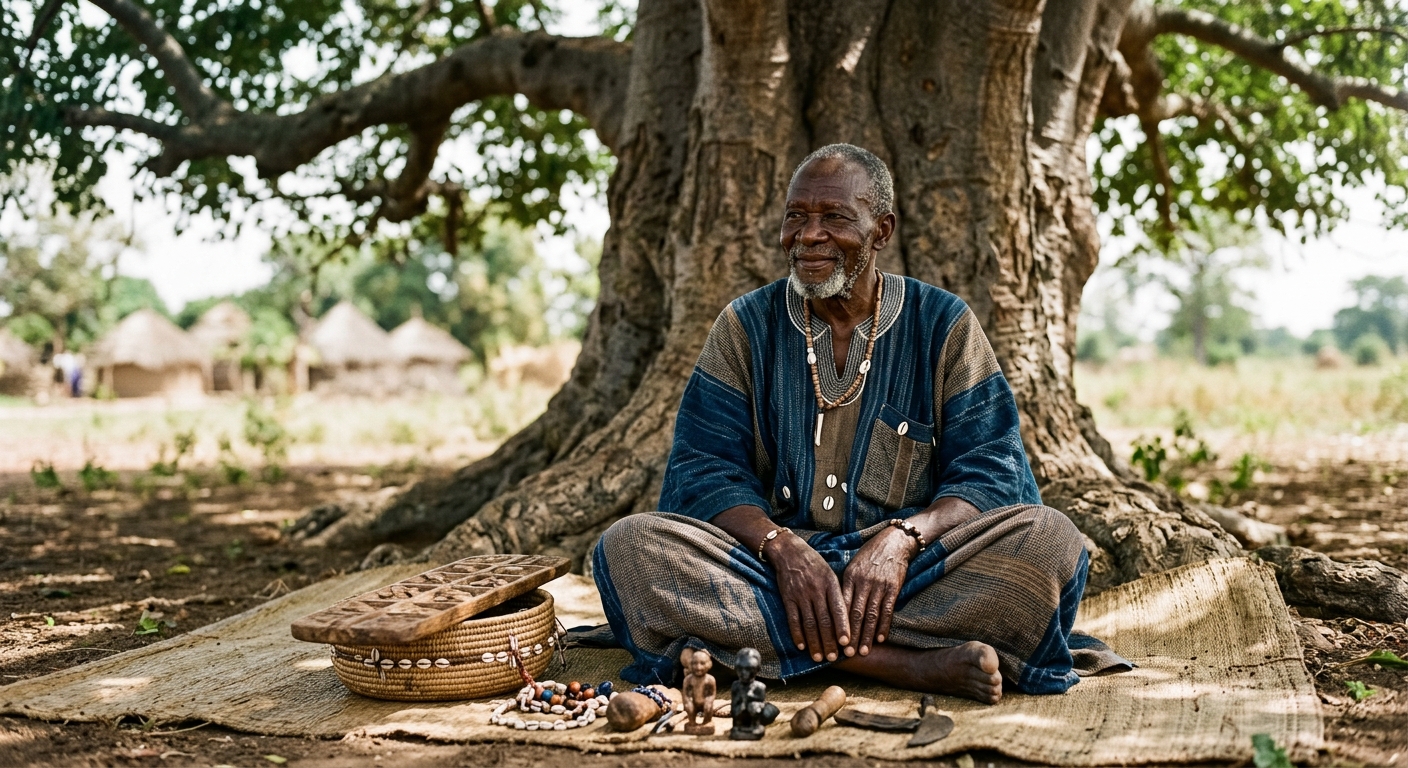
To further clarify these distinctions, it is helpful to look closely at the term “elder” and how its usage differs between Western vernacular and traditional indigenous systems.
In many cultures worldwide, “elder” is used informally as a title of respect for an older person or a revered community figure. This recognition is based on the person’s lived experience, age, personal character, or contributions to the community, rather than a specific spiritual ritual or formal initiation.
For example, in African American culture, the honorific term “Bàbá ” comes from West African and Pan-African languages, where it traditionally means “father,” “revered elder,” or “wise man.”
Describing someone as an initiated elder is also largely a Western translation or framing.
Traditional African and indigenous spiritual systems rarely use the English term “initiated elder” to describe a person’s functional spiritual position or rank. When an individual undergoes specialized initiations beyond standard life-stage rites (such as manhood/womanhood/elderhood rites), they are given specific titles tied to their function within the community.
Depending on the culture, lineage, and calling, an initiate might be called a:
- Priest or Priestess (e.g., Sagan, Vodounsi, or Babalawo)
- Diviner (e.g., an Afa or Ifá practitioner)
- Chief (a supreme spiritual and political leader)
- Medicine Man/Woman (such as a Tingansob in Dagara tradition)
While a priest or diviner may eventually become advanced in age and be respected as a community elder, their spiritual authority stems primarily from their specific lineage title and operational role, rather than the colloquial usage of calling someone an elder.
When you step back from the terminology and Western definitions, the core takeaway is straightforward: these spiritual frameworks exist to give you a rooted, unshakable foundation to live your life fully.
An initiation is not a trophy, a credential, or a mandate to abandon your normal life for ritual duties; it is simply a path back to yourself. It serves as a spiritual grounding, whether experienced through a life-stage rite such as the Daughters of the Moon, or a deep immersion in nature like the Ritual Healing Village 9-Day Encampment. These moments are designed to align you with your soul’s destiny, bring balance to your everyday existence, and clarify your identity so you can walk through the world with purpose.
Understanding this distinction offers tremendous freedom, especially if you have ever felt pressure to transform an initiation into a formal spiritual career. For the vast majority of people, spiritual alignment is meant to enrich regular life, empowering you to thrive as a parent, a professional, an artist, or a scientist without taking on sacred offices you were never meant to carry.
True eldership in a social sense flows naturally from the wisdom, character, and integrity you cultivate over a lifetime of living in that alignment. Meanwhile, specific roles like priests, diviners, or chiefs are distinct, specialized callings meant only for a few.
Recognizing where you stand allows you to honor your spiritual journey on its own terms, free from presumptive expectations, and fully grounded in who you were born to be.
Ashe!